The Lost Art of Doing Nothing | Why Quiet Moments Matter
Discover why doing nothing is becoming a lost art and how quiet moments, boredom, and space can improve creativity, awareness, and wellbeing.
QUIET
Ela Urbanowicz
2 min read
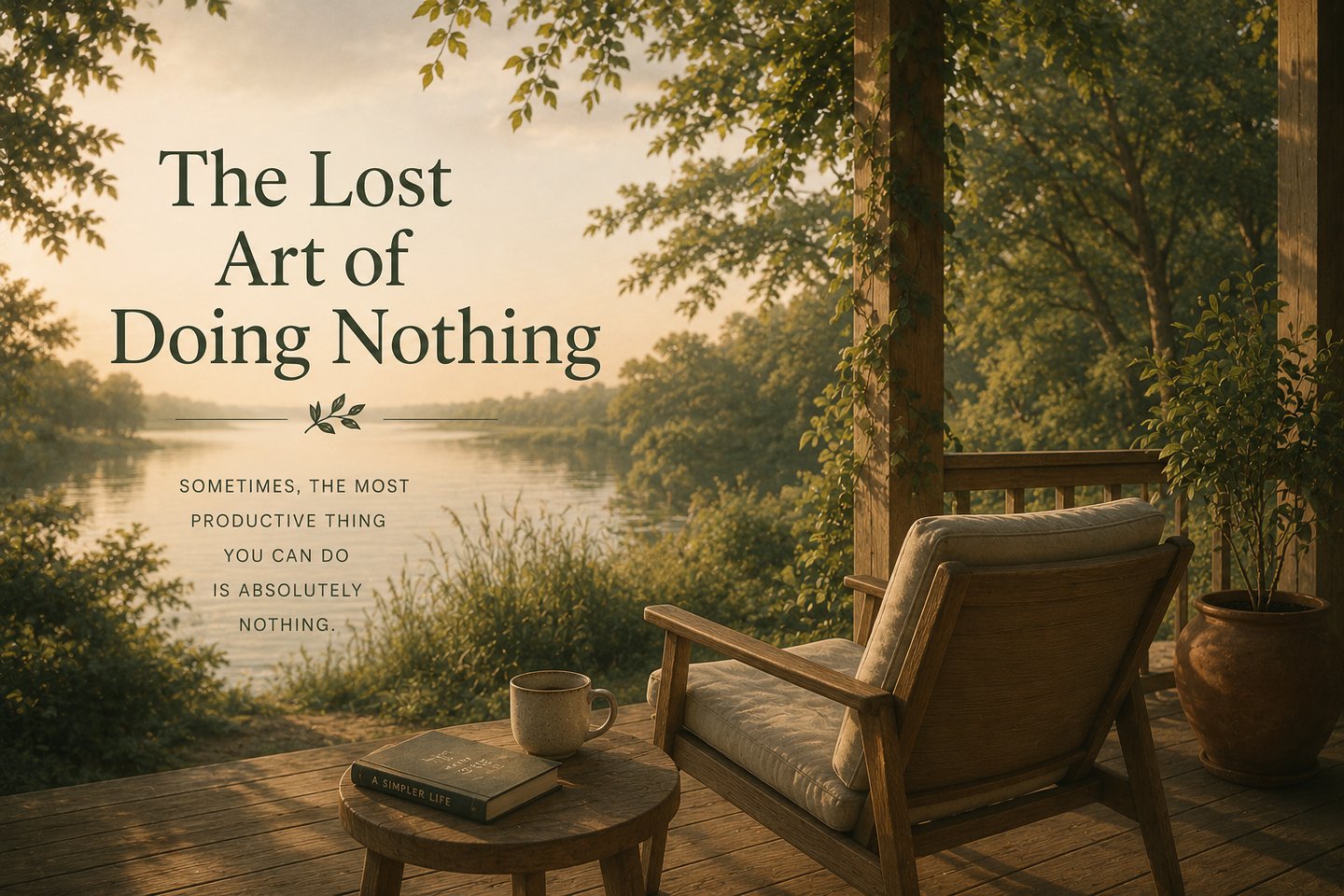
When was the last time you did absolutely nothing? No watching something, listening to something. No scrolling, no working, no planning. Just sitting.
Looking out of a window. Watching clouds drift by. Listening to rain on the roof. Simply existing for a few minutes without trying to achieve anything.
For many of us, the answer is surprisingly difficult to remember. Modern life has become very good at filling every space. A few minutes waiting for a friend? Check your phone.
Standing in a queue? Check your phone. Waiting for the kettle to boil? Check your phone. A quiet evening? Find something to watch.
We have become so accustomed to constant stimulation that doing nothing can feel uncomfortable. Sometimes even wasteful. But perhaps doing nothing is not a waste of time at all. Perhaps it is something we have quietly lost.
Why We Struggle With Doing Nothing
From an early age, we are encouraged to stay busy. Be productive. Use your time wisely. Make progress. Achieve more.
These are not bad things. Yet somewhere along the way, many of us begin to believe that every moment must serve a purpose.
A walk should improve fitness. A book should teach us something. A hobby should become a skill. Even relaxation often becomes another item on a to-do list.
We forget that some activities are valuable simply because they are enjoyable. And some moments are valuable simply because they allow us to pause.
The Hidden Value of Empty Space
Imagine a page filled with words. No margins. No spacing. No gaps.
It would be difficult to read.
The space helps the words make sense. Life is similar. Without pauses, everything begins to blend. Thoughts become rushed. Days become repetitive. Experiences pass unnoticed. Doing nothing creates space. Space to think. Space to notice. Space to remember what we actually feel.
Some of our best ideas arrive when we stop actively searching for them.
Some of our most important realisations appear when there is finally enough quiet to hear them.
Boredom Is Not the Enemy
Many of us have learned to fear boredom. The moment boredom appears, we instinctively reach for a distraction.
But boredom serves a purpose. It encourages curiosity. It encourages imagination. It pushes the mind to explore rather than consume.
Children often discover games, stories, and adventures because they become bored first. Adults are no different.
When every moment is filled, there is less room for creativity to emerge.
Sometimes boredom is simply the doorway to something more interesting.
A Few Minutes Is Enough
Doing nothing does not require a retreat, a mountain cabin, or an afternoon free of responsibilities.
It can happen in small moments. A few minutes with a cup of tea. A train journey without headphones. A walk without a destination. Sitting in a garden and watching the clouds, looking out of a window.
These moments may appear insignificant.
Yet they often leave us feeling more rested than an hour spent switching between screens.
The Quick Read Moments Philosophy
At Quick Read Moments, we believe that not every moment needs to be filled.
Some moments are improved by curiosity. Some by movement. Some with a good book. And some by nothing at all.
In a world that constantly asks for our attention, doing nothing can feel surprisingly radical.
Perhaps the lost art of doing nothing is not really about doing nothing.
Perhaps it is about creating enough space to notice life as it happens.
And that may be one of the most valuable things we can do.
Part of the Quick Read Moments Philosophy
This article belongs to the Quiet pillar of the Quick Read Moments philosophy.